Banana, the world's most popular and eaten tropical fruit is available at anytime of the year. It has been grown for over 1 million years; probably one of the first plants to be cultivated. Native to Malaysia, banana is also suspected to be the earth's first fruit.
Banana is actually the world’s largest plant without a woody stem. In other words, it is not a tree, rather a giant herb of the same family as lilies, orchids and palms. The stalks grow up to 25 feet high. The stem is made of tightly wrapped leaves and has a terminal crown of large, entire leaves and a hanging cluster or a bunch of fruits containing anywhere from 50 to 150 bananas. Individual fruits are tiered, also known as "hands", with up to 20 bananas or "fingers".
The banana fruit is elongated, pronouncedly 3-angled, curved, hornlike, oblong, cylindrical, blunt and/or crescent-shaped. Also referred as nature's fast food, it comes prepackaged in its own biodegradable protective jackets or outer layer that is commonly called as a peel or skin. Unripe skin turns from deep-green to yellow or red when ripened. The inner portion is ivory-white to yellow or salmon-yellow firm, astringent, creamy edible flesh. It has gummy latex when unripe and turns tender and slippery, or soft and mellow or rather dry and mealy or starchy when ripe. The banana has numerous strings known as phloem bundles which run between the skin and the flesh. They are usually removed individually after the skin is removed. The commonly cultivated bananas are generally seedless with just vestiges of ovules visible as brown specks in the slightly hollow or faintly pithy centre, especially when the fruit is overripe. Wild bananas may be nearly filled with black, hard, rounded or angled seeds and have scant flesh. Sometimes, a black dead flower remains at the end of the fruit.

Banana is wonderfully sweet, mild, sub acid with a distinct apple tone. Even for local consumption, banana is harvested green as it is the only fruit that never develops its best flavour if left to ripen on the plant. After they are picked, the sugar content increases from 2% to 20% because as banana ripe, the starch in the fruit turns to sugar. Therefore, the riper the banana the sweeter it will taste.
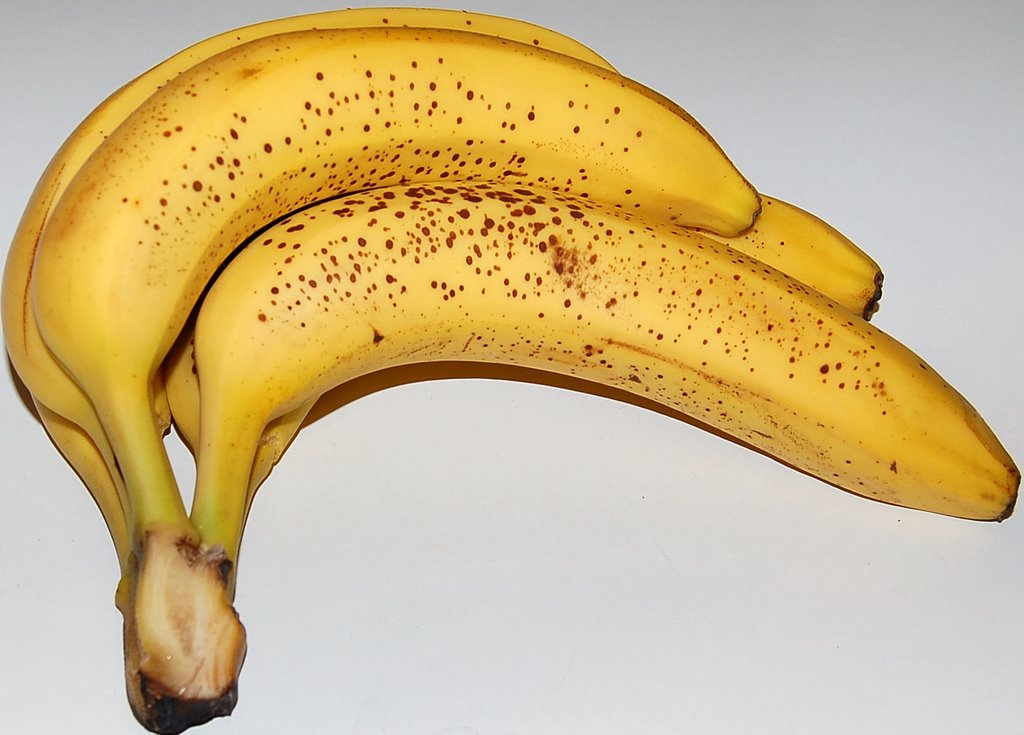
Choose plump, evenly coloured yellow bananas flecked with tiny brown specks, which is a sign of ripeness. Avoid those with blemishes that usually indicate bruising. Once exposed to air, a peeled banana will begin to darken. To avoid discolouration, brush with lemon juice. To keep ripe bananas from getting softy and mushy, just refrigerate it. Though the peel will darken, the fruit remains unchanged.
A banana gives an instant, sustained and substantial boost of energy. Just two bananas provide enough energy for a strenuous 90-minutes workout. Banana is a rich source of potassium, iron, vitamin C, vitamin B6 and dietary fiber. Being low in protein and fats, banana contains more digestible carbohydrates than any other fruit. This enables the body to burn off calories from carbohydrates more quickly and easily than calories from protein or fat. Banana is definitely a natural remedy for many ills. The inside of a banana skin could be rubbed onto mosquito bites. The juice extract prepared from the tender core of the banana stem is used to treat kidney stones.
In Southeast Asia and India, banana flowers and stems are eaten. The Caribbean and Southeast Asians use the leaves for wrapping and packing food. In Mexico, Central and South America, the leaves are used in cooking. The Indians serve their food on the banana leaves. In Eastern Africa, beer is brewed from bananas. Banana is such a versatile fruit that could be used in any form of cooking and baking. I am a great fan of banana. I just love the aroma of banana being cooked or baked. I have used it in beverages, baking and some Malaysian desserts. This time I have tried banana in pancake that I am submitting for this month's Jihvā for Ingredients event.
Banana Pancake
What do we need:
1 cup plain flour
1 1/2 tsp baking powder
1/2 tsp salt
1 large banana, mashed
1 egg
1/2 cup coconut milk
1/4 cup sugar
1 tbsp melted butter
2 tbsp grated coconut
1 tsp butter
How do we do it:
Sift the flour, baking powder and salt.
Mix the mashed banana, egg, coconut milk, sugar and the melted butter together. Stir until the sugar dissolves. Combine the banana mixture with the flour mixture. Gradually stir in the grated coconut. Cover and leave the batter to meld for about 30 minutes.
Lightly grease pan with a touch of butter. Drop a tablespoonful of batter. When the pancake is full of bubbles, flip over and cook for another 30 seconds.
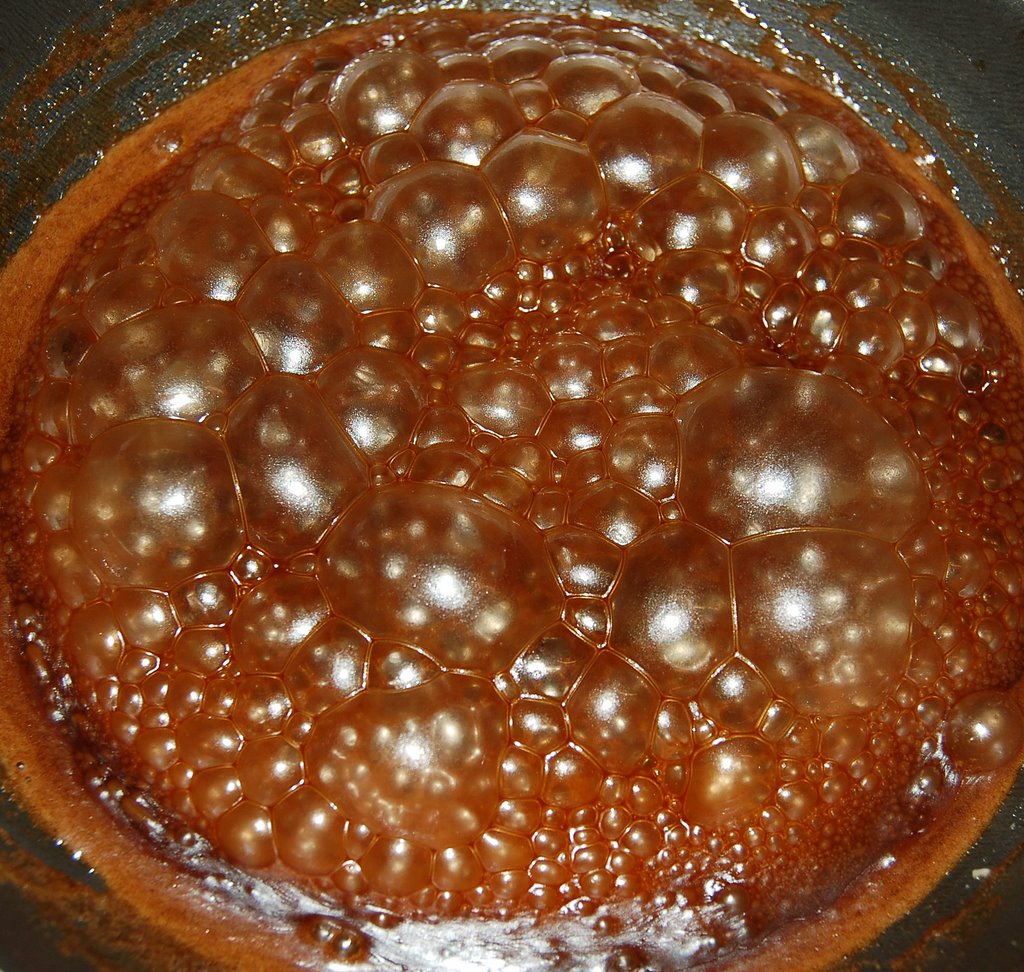
Serve Banana Pancake warm with a drizzle of palm sugar syrup.

Also check out my other entries using banana as a main ingredient:
Energy boosters- Strawberry Smoothie and Banana Chocolate Milk
Baked goods- Banana Bread Pudding and my ever famous Banana Butter Cake
Banana is actually the world’s largest plant without a woody stem. In other words, it is not a tree, rather a giant herb of the same family as lilies, orchids and palms. The stalks grow up to 25 feet high. The stem is made of tightly wrapped leaves and has a terminal crown of large, entire leaves and a hanging cluster or a bunch of fruits containing anywhere from 50 to 150 bananas. Individual fruits are tiered, also known as "hands", with up to 20 bananas or "fingers".
The banana fruit is elongated, pronouncedly 3-angled, curved, hornlike, oblong, cylindrical, blunt and/or crescent-shaped. Also referred as nature's fast food, it comes prepackaged in its own biodegradable protective jackets or outer layer that is commonly called as a peel or skin. Unripe skin turns from deep-green to yellow or red when ripened. The inner portion is ivory-white to yellow or salmon-yellow firm, astringent, creamy edible flesh. It has gummy latex when unripe and turns tender and slippery, or soft and mellow or rather dry and mealy or starchy when ripe. The banana has numerous strings known as phloem bundles which run between the skin and the flesh. They are usually removed individually after the skin is removed. The commonly cultivated bananas are generally seedless with just vestiges of ovules visible as brown specks in the slightly hollow or faintly pithy centre, especially when the fruit is overripe. Wild bananas may be nearly filled with black, hard, rounded or angled seeds and have scant flesh. Sometimes, a black dead flower remains at the end of the fruit.

Bananas
Banana is wonderfully sweet, mild, sub acid with a distinct apple tone. Even for local consumption, banana is harvested green as it is the only fruit that never develops its best flavour if left to ripen on the plant. After they are picked, the sugar content increases from 2% to 20% because as banana ripe, the starch in the fruit turns to sugar. Therefore, the riper the banana the sweeter it will taste.
Choose plump, evenly coloured yellow bananas flecked with tiny brown specks, which is a sign of ripeness. Avoid those with blemishes that usually indicate bruising. Once exposed to air, a peeled banana will begin to darken. To avoid discolouration, brush with lemon juice. To keep ripe bananas from getting softy and mushy, just refrigerate it. Though the peel will darken, the fruit remains unchanged.
A banana gives an instant, sustained and substantial boost of energy. Just two bananas provide enough energy for a strenuous 90-minutes workout. Banana is a rich source of potassium, iron, vitamin C, vitamin B6 and dietary fiber. Being low in protein and fats, banana contains more digestible carbohydrates than any other fruit. This enables the body to burn off calories from carbohydrates more quickly and easily than calories from protein or fat. Banana is definitely a natural remedy for many ills. The inside of a banana skin could be rubbed onto mosquito bites. The juice extract prepared from the tender core of the banana stem is used to treat kidney stones.
In Southeast Asia and India, banana flowers and stems are eaten. The Caribbean and Southeast Asians use the leaves for wrapping and packing food. In Mexico, Central and South America, the leaves are used in cooking. The Indians serve their food on the banana leaves. In Eastern Africa, beer is brewed from bananas. Banana is such a versatile fruit that could be used in any form of cooking and baking. I am a great fan of banana. I just love the aroma of banana being cooked or baked. I have used it in beverages, baking and some Malaysian desserts. This time I have tried banana in pancake that I am submitting for this month's Jihvā for Ingredients event.
Banana Pancake
What do we need:
1 cup plain flour
1 1/2 tsp baking powder
1/2 tsp salt
1 large banana, mashed
1 egg
1/2 cup coconut milk
1/4 cup sugar
1 tbsp melted butter
2 tbsp grated coconut
1 tsp butter
How do we do it:
Sift the flour, baking powder and salt.
Mix the mashed banana, egg, coconut milk, sugar and the melted butter together. Stir until the sugar dissolves. Combine the banana mixture with the flour mixture. Gradually stir in the grated coconut. Cover and leave the batter to meld for about 30 minutes.
Lightly grease pan with a touch of butter. Drop a tablespoonful of batter. When the pancake is full of bubbles, flip over and cook for another 30 seconds.
Serve Banana Pancake warm with a drizzle of palm sugar syrup.

Also check out my other entries using banana as a main ingredient:
Energy boosters- Strawberry Smoothie and Banana Chocolate Milk
Baked goods- Banana Bread Pudding and my ever famous Banana Butter Cake