Showing posts with label Palm Sugar. Show all posts

Sunday, 13 August 2006

Weekend Baking Session # 24

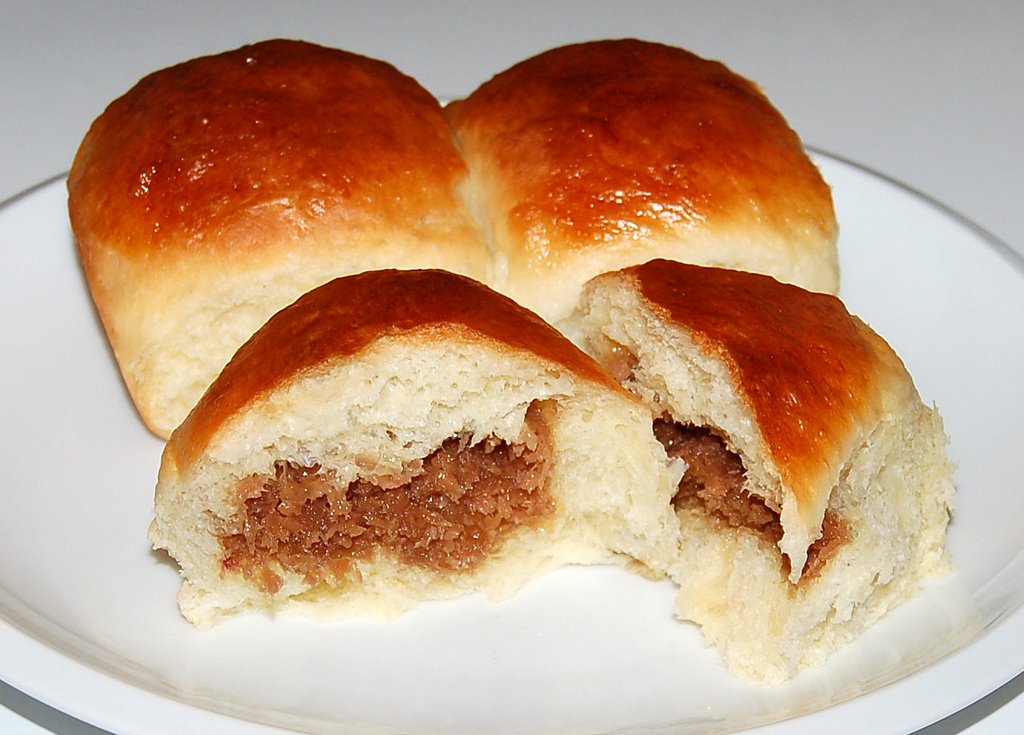
Suddenly I was craving for coconut bun. It was my favourite breakfast back home. Along with a mug of hot Milo, coconut bun tastes even greater. After 4 years, I had them for breakfast. For once I felt that I was at home. What a feeling!! For those who want to have the same feeling, here is the recipe...

Coconut Bun

What do we need:

Bun
2 cups plain flour
4 tbsp sugar
1 1/2 tsp active dried yeast
1/2 cup milk
1/4 cup butter
1/2 tsp salt
1 egg

Coconut Filling
1 cup grated coconut
1/3 cup grated palm sugar (or more as per desired)
1/2 cup water
1 tbsp plain flour

Egg Wash
1 egg yolk
1 tbsp water

How do we do it:

Whisk together the flour, yeast, sugar and salt. Set aside.

Heat milk and butter until the butter melts and the mixture is about 50° C warm. Pour into the flour mixture. Also add the egg into the flour. Knead the dough until smooth and shiny. Cover and let rise in a warm place for 1 hour or until doubled in bulk.

Meanwhile, heat the water and palm sugar until the sugar dissolves. Add the grated coconut and flour. Stir constantly until the mixture becomes soft paste. Remove from heat and let the coconut filling cool.

Punch down the dough and knead gently on a lightly floured surface. Divide dough into 12 equal sized balls. Flatten the each ball and fill with the completely cooled coconut filling and seal the bun neatly. Gently rotate the bun repeatedly until it forms a smooth-skinned ball. Place each bun into a greased baking dish. Cover the dish and let the buns rise again in a warm place until nearly double in size, approximately 45 minutes.

Beat together the egg yolk and water. Egg wash the buns. Bake in a preheated oven at 190° C for 20 minutes.

Monday, 31 July 2006

Jihvā for Ingredients - Flour

Flour is an ingredient used in many foods. It is a fine, powdery foodstuff obtained by grinding and sifting the meal of any of various edible grains or other starchy food sources. It can also be made from legumes and nuts, such as soy, peanuts, almonds, and other tree nuts. Flours are normally identified according to its grain source. A flour can range in texture from coarse to extremely soft and powdery, depending on the degree of bolting (sifting) it receives at the mill.

Flour is always based on the presence of starches, which are complex carbohydrates. Different types of flour are needed for different products. Wheat flour is the main ingredient in most food throughout the world. Rice flour and tapioca starch are more widely used in South East Asian delicacies. Gram flour used mainly used in Indian cooking.

In line with the theme FLOUR, I made a South East Asian delicacy using three different types of flours as its main ingredients. Different flavours and textures of the different flours give a unique taste and texture. I have added alkaline or lye water to give a bouncy or spring back texture to this kuih.

Kuih Kosui

What do we need:

1/2 cup grated palm sugar or brown sugar
1 cup water

2/3 cup rice flour
1/4 cup plain flour
1/4 cup tapioca starch
1/2 cup coconut milk from 1/4 coconut
1 tsp alkaline or lye water

1 cup grated coconut
1/4 tsp salt

How do we do it:

Cook the water and palm sugar until the sugar dissolve. Strain and set aside to cool.

Add the cooled palm sugar syrup to the flours and alkaline water. Mix thoroughly. Strain the batter.

Pour the batter into a greased mould or greased little moulds. Steam on high for 15 minutes. Let the kuih cool.

Meanwhile, mix the grated coconut and salt together. When the kuih has cooled completely, cut into desired shapes and dredge the kuih into the salted coconut.


Kuih Kosui makes a great breakfast or evening tea snack.

Friday, 30 June 2006

From My Rasoi # 6 - For The Love of Rice

Glutinous rice, often called sticky rice is uniquely delicious, tasty and sweet rice. It is starchy and yields attractively sticky, moist, firm and dense rice when cooked. Thus it does a great job of filling the stomach. Glutinous rice can be easily distinguished from other varieties by its short grain and milky colour.


Glutinous Rice


Despite the misleading name, glutinous rice does not contain dietary gluten. Therefore, theoretically it should be safe for gluten-free diets. The sticky consistency of the rice is derived from two kinds of starch in the kernels, namely amylase and amyl pectin.

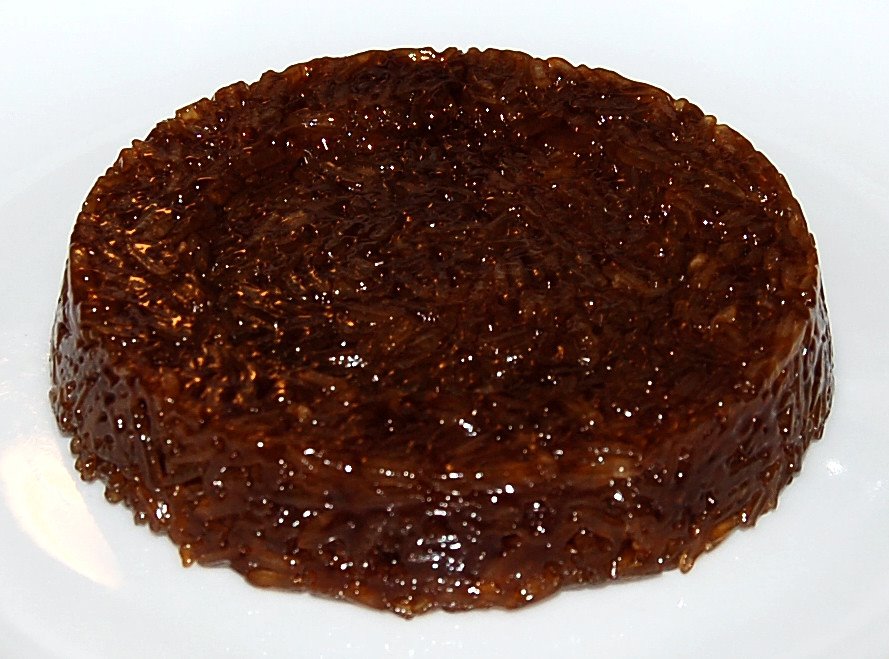
As an entry for FMR # 6 – For The Love Of Rice, I have chosen to make wajik which is steamed glutinous rice braised in palm sugar and coconut milk syrup.

Wajik

What do we need:

1 cup glutinous rice
1 blade pandanus / screw pine leaf
salt

Syrup
1 cup thick coconut milk
1/3 cup palm sugar (as per desired)
2 blades pandan / screw pine leaves

How do we do it:

Wash the rice and soak the rice at least 4 hours. It is important to wash the rice before soaking to ensure that the rice do not break. Drain the rice and mix with salt. Place a knotted screw pine leaf on top of the rice. Steam for 5 minutes or until half cooked. Remove from heat and using a fork, scratch to lossen the rice.


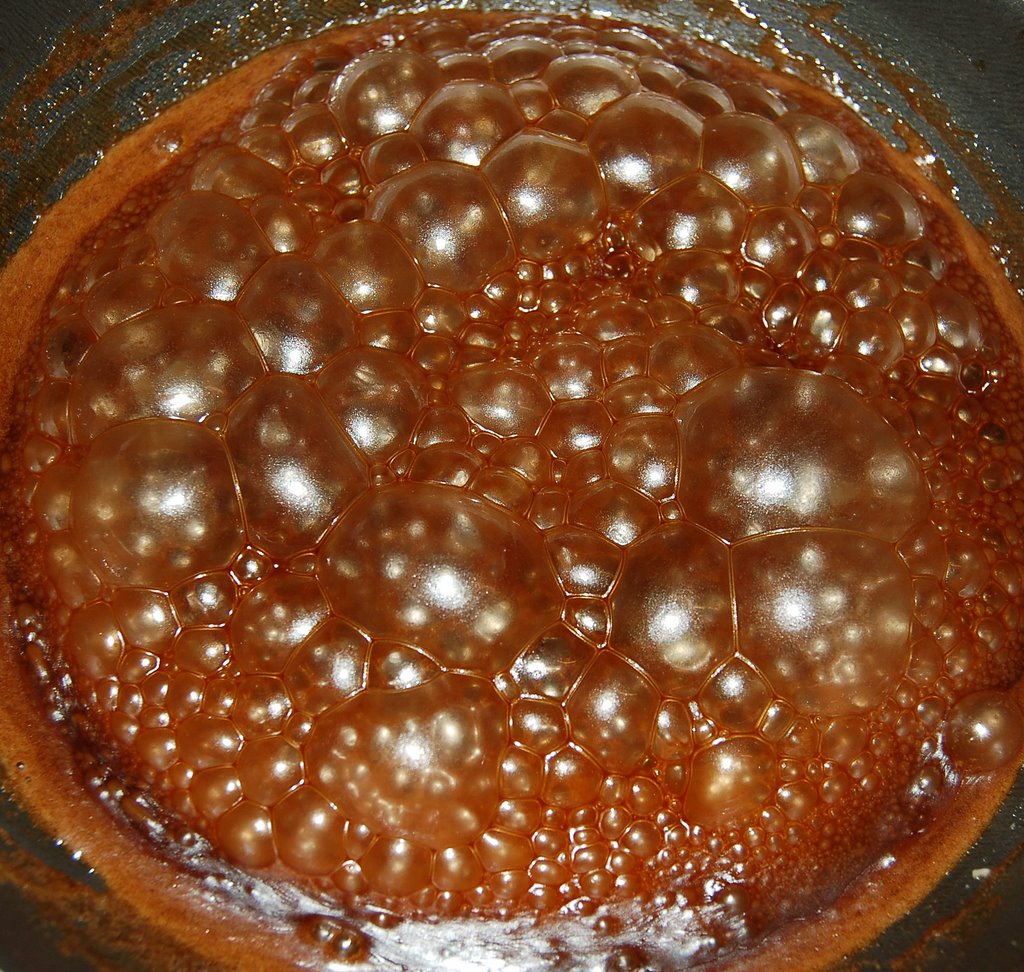
Palm sugar and coconut milk syrup at soft ball stage


In a heavy bottomed pan, boil the coconut milk with palm sugar and knotted screw pine leaves. When the syrup reaches soft ball stage, add the rice. Stir continously to prevent from getting burnt. Remove from heat when the mixture does not stick to the sides of the pan. Discard the pandan leaves. Transfer to a greased mould. Cool completely before cutting into desired shapes.


Saturday, 22 April 2006

Nibbles For My Toddler # 4

Black grams are also known as urad dal or ulundu in tamil. It is the most nutritious pulse. Pulses are the only sources of protein for the diet, other than meat. For vegetarians pulses are a vital part of the diet. For non vegetarians, pulses offer an alternative source of protein without the fat but with a lot of fiber. Also beans and lentils are rich in complex carbohydrates, vitamins and minerals.

The other day hubby bought a big pack of urad dal. I used some to make vadei. Still have a lot more in the pantry. As it is Mahisha´s 19th month anniversary today, I thought of using the dal as the main ingredient to create something interesting for her.

Black Gram Fritters

What do we need:


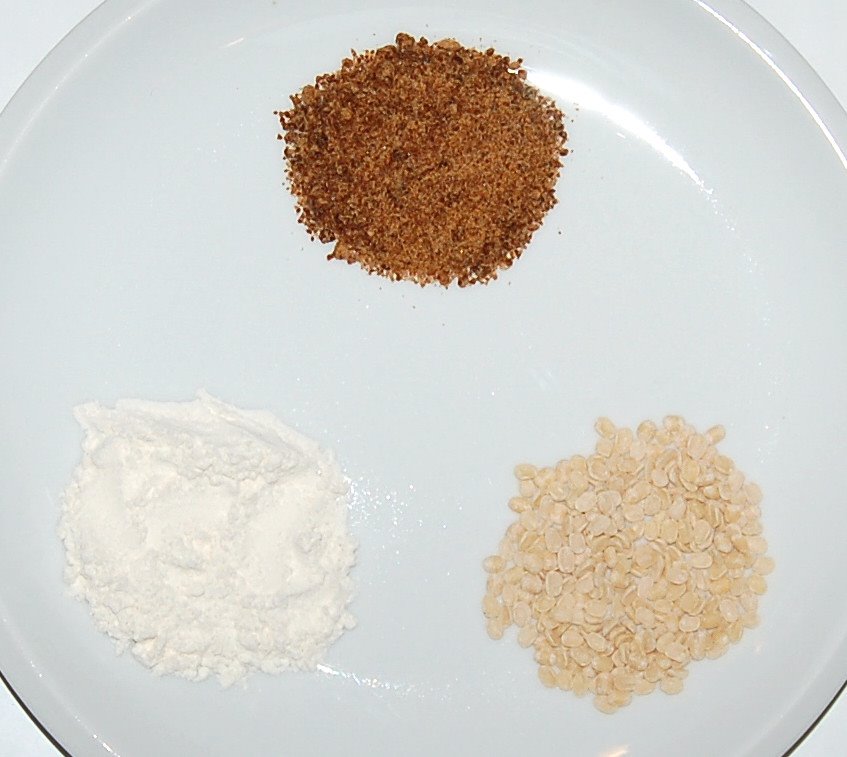
1/2 cup black gram or urad dal, split and skinned
1/2 cup water, or as required
4 tbsp plain flour
4 tbsp palm sugar
1 tsp baking powder
1/2 tsp salt
oil for deep frying

How do we do it:

Soak the dal overnight. After washing, grind with water to become a soft and smooth paste. Add the rest of the ingredients to the ground dal. Stir well to become a thick batter.

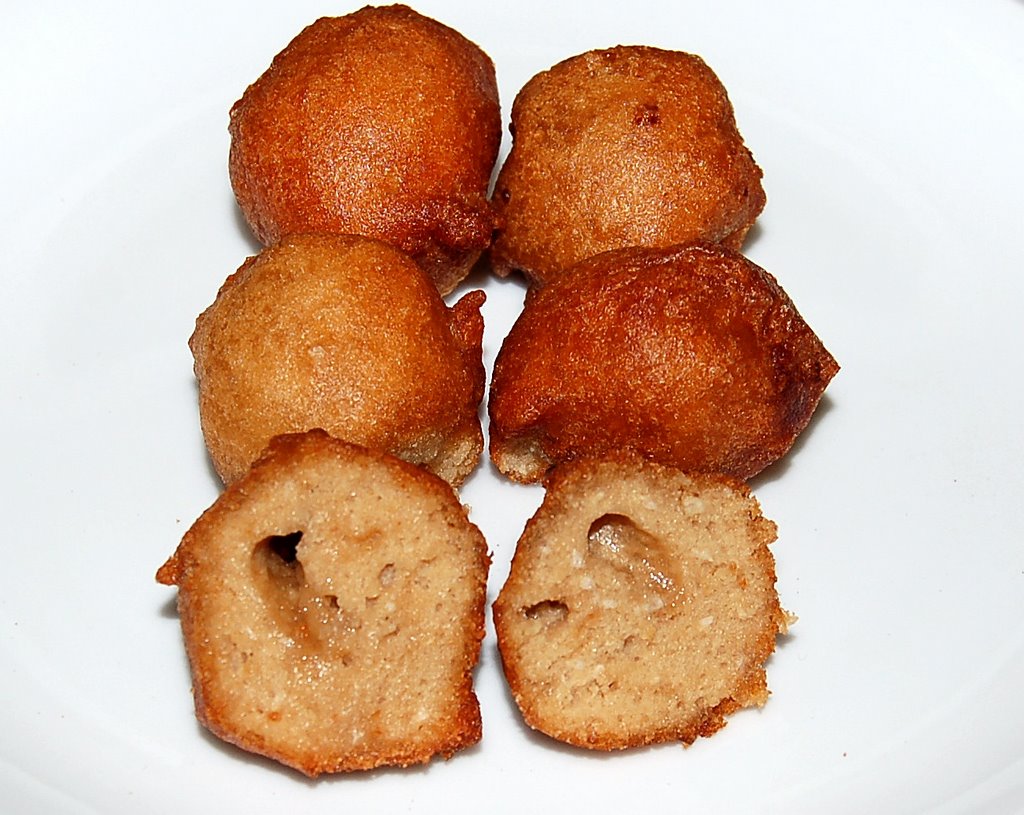
Heat oil in a frying pan. Drop by tablespoonful into the oil. Fry on low medium heat until brown. Serve warm.


The fritters taste very much like paniyaram. They are crispy outside and soft inside.

Wednesday, 29 March 2006

The Root

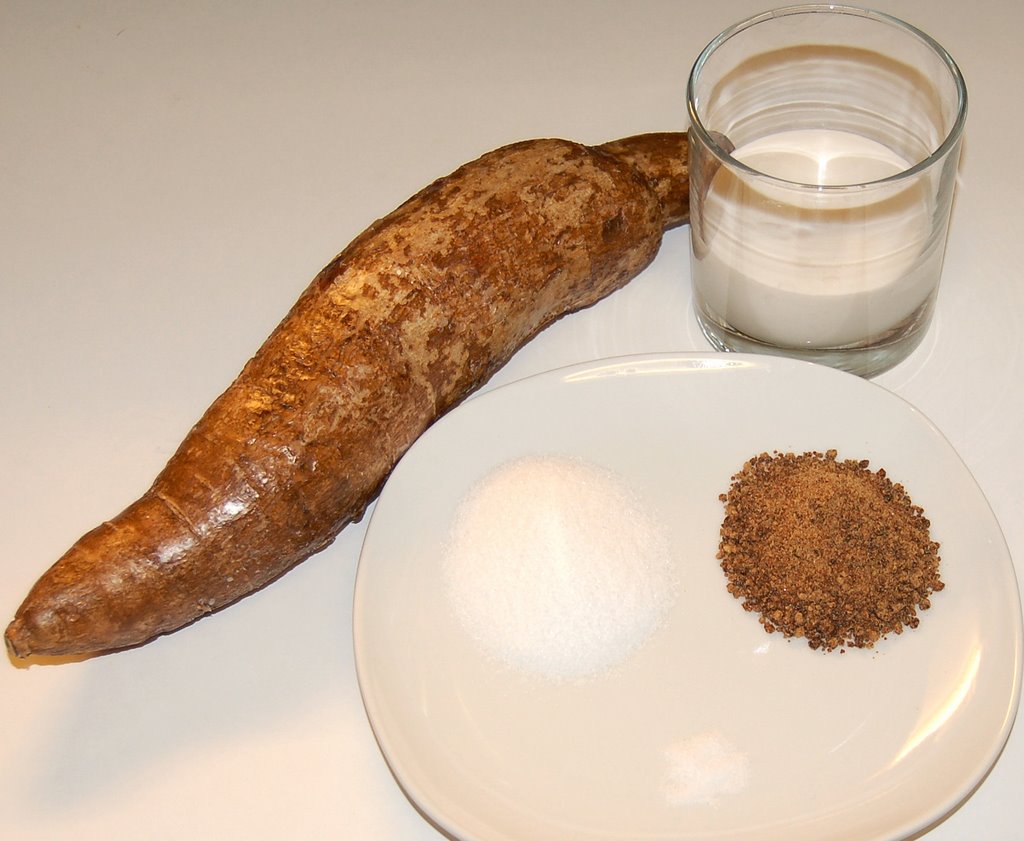
Bought tapioca the other day when I went shopping. Been such a long time since I ate tapioca. It is a very versatile ingredient. Many things can be made out of it, sweet or savoury.

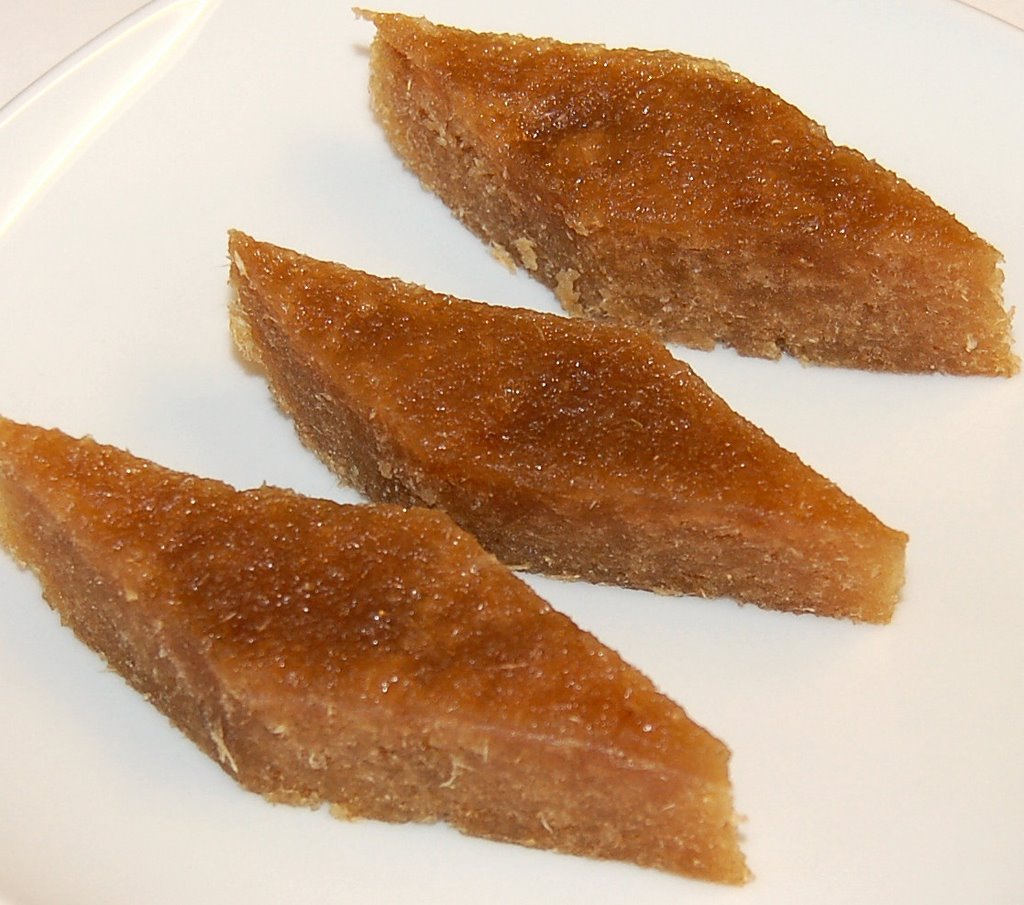
I just love kuih bingka ubi. Have tried making the baked version 4 times. All 4 attempts were failures. Being a person who do not give up that easily, I tried steaming it this time. The result, SUCCESS!!!!

Kuih Bingka Ubi (Tapioca Cake)


What do we need:

500g tapioca
1/4 cup thick coconut milk
3 tbsp palm sugar
2 tbsp white sugar
1/2 tsp salt

How do we do it:

Peel and finely grate the tapioca. Squeeze out the water content in the grated tapioca to get rid of the starch. Would make about 2 cups.


Mix the rest of the ingredients into the tapioca. Transfer the mixture into a greased pan. Steam on high for 30 minutes.

Cool completely before cutting into desired shape.


Bingka Ubi makes great breakfast or tea time snack.
Related Posts Plugin for WordPress, Blogger...