Lychee, also spelled litchi or laichi, is a tropical fruit tree that originated in southern China. It is the most popular Chinese fruit and has been cherished for over 2,000 years.
Lychee fruits are showy and are borne in loose pendent clusters of 2 to 30. It is a drupe, oval, heart-shaped or nearly round shaped and is quite small though at only about 2.5 cm wide and 4 cm long; about the size of a small plum. The fruit is covered by skin or pericarp that is thin, leathery, roughly-textured or minutely warty rind that comes off easily but is inedible. It is usually strawberry-red, sometimes rose, pinkish or amber, and some types tinged with green colour. This skin often referred to as the "shell" encases a layer of glossy, succulent, thick, translucent-white to grayish or pinkish fleshy pulp which usually separates readily from the seed. The flesh is similar in texture to a grape but is chewier. It is edible and consists of a highly developed aril enveloping the seed. The flavour of the delicately scented flesh is distinctive, sub acid, sweet, exotic, and very juicy. In the centre is a single glossy dark-brown nut-like seed of about 2 cm long and 1–1.5 cm in diameter. The seed, which looks like a buckeye seed, is inedible as it is slightly poisonous.
Fresh lychee fruit still in their skin will explode if thrown onto a fire. Lychee naturally dehydrates in just a few days. The skin turns brown and brittle and the flesh becomes dry, shriveled, dark reddish brown and the flesh becomes brown and crisp. As it resembles a nut, dried lychee is nicknamed “lychee nut”. It has a raisin-like, richer and musky flavour. The flesh of the dried lychee is eaten like raisins, as a snack. The Chinese use it to sweeten their tea.
Other than potassium, lychee contains various minerals. It is rich in vitamins B & C and is a fairly high source of vitamins E and D. Eaten in moderate amounts, it is believed to relieve cough and is said to have a beneficial effect on gastralgia, tumours and enlargements of the glands. Though the Chinese believe that excessive consumption of fresh lychees causes fever and nosebleed, they use the seeds to relieve neurological pains and orchitis. A tea of the fruit peel is taken to overcome smallpox eruptions and diarrhea. According to legends, ancient devotees have consumed from 300 to 1,000 of fresh lychees per day. In India, the seeds are powdered and used for intestinal troubles. Decoction of the root, bark and flowers are gargled to alleviate ailments of the throat. In the USA, lychee roots are being experimented on a type of tumour.
When purchasing, choose lychee that has bright coloured skin and free of blemishes. Lychee could be kept at room temperatures for only two or three days. Therefore, place it in a plastic bag and refrigerate unpeeled for up to a week.
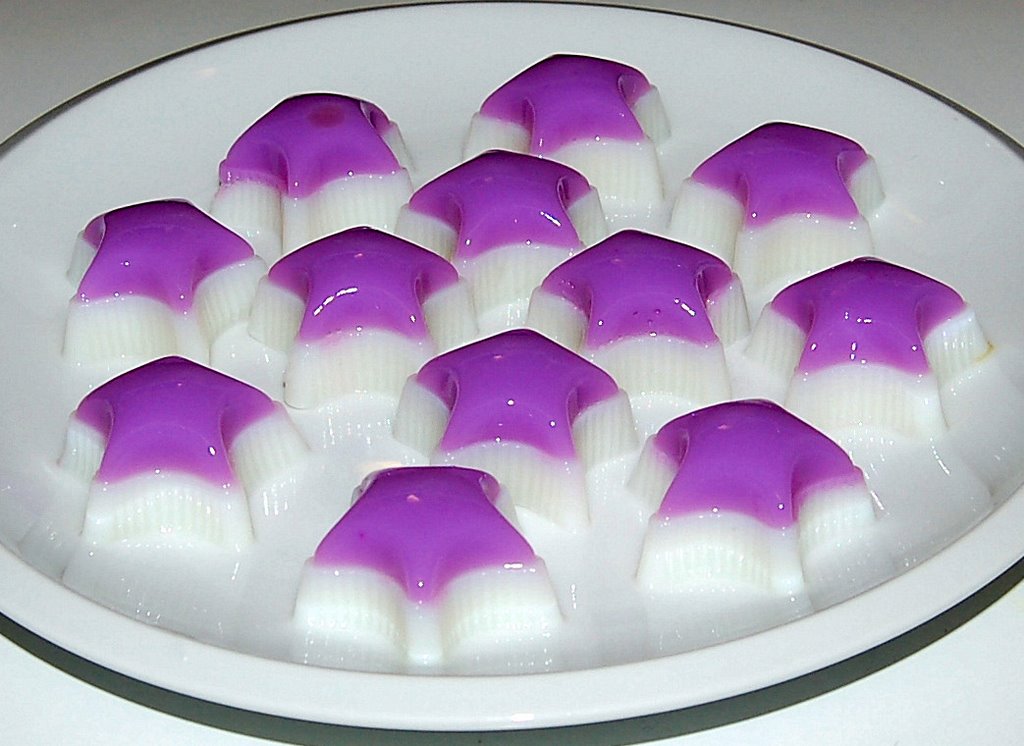
Lychee is a premier dessert fruit. Though available tinned and dried, it is most relished fresh; peeled and pitted. It is also used to make ice cream, juice, candies and wine. Recently, I flavoured my jelly with lychee.

Lychee Jelly
What do we need:
1 tin lychee
5 g agar-agar strands
2 cups water
1/4 cup sugar
A pinch of salt
A few drops of food colouring
How do we do it:
Soak the the agar-agar strands in water for an hour. Wash and drain. Cook with water.
Strain the lychees and save the syrup.
When the jelly strands have dissolved, add the lychee syrup, sugar and salt. Cook until the sugar dissolve. Colour the jelly mixture with a fre drops of food colouring. Mix well.
Roughly chop the lychees and scatter in a mould. Strain the jelly mixture into the mould onto the lychee pieces. Chill in fridge. To ease unmoulding of the jelly, ensure that the moulds are wet before pouring the jelly mixture. Serve Lychee Jelly cold.

Lychee fruits are showy and are borne in loose pendent clusters of 2 to 30. It is a drupe, oval, heart-shaped or nearly round shaped and is quite small though at only about 2.5 cm wide and 4 cm long; about the size of a small plum. The fruit is covered by skin or pericarp that is thin, leathery, roughly-textured or minutely warty rind that comes off easily but is inedible. It is usually strawberry-red, sometimes rose, pinkish or amber, and some types tinged with green colour. This skin often referred to as the "shell" encases a layer of glossy, succulent, thick, translucent-white to grayish or pinkish fleshy pulp which usually separates readily from the seed. The flesh is similar in texture to a grape but is chewier. It is edible and consists of a highly developed aril enveloping the seed. The flavour of the delicately scented flesh is distinctive, sub acid, sweet, exotic, and very juicy. In the centre is a single glossy dark-brown nut-like seed of about 2 cm long and 1–1.5 cm in diameter. The seed, which looks like a buckeye seed, is inedible as it is slightly poisonous.
Fresh lychee fruit still in their skin will explode if thrown onto a fire. Lychee naturally dehydrates in just a few days. The skin turns brown and brittle and the flesh becomes dry, shriveled, dark reddish brown and the flesh becomes brown and crisp. As it resembles a nut, dried lychee is nicknamed “lychee nut”. It has a raisin-like, richer and musky flavour. The flesh of the dried lychee is eaten like raisins, as a snack. The Chinese use it to sweeten their tea.
Other than potassium, lychee contains various minerals. It is rich in vitamins B & C and is a fairly high source of vitamins E and D. Eaten in moderate amounts, it is believed to relieve cough and is said to have a beneficial effect on gastralgia, tumours and enlargements of the glands. Though the Chinese believe that excessive consumption of fresh lychees causes fever and nosebleed, they use the seeds to relieve neurological pains and orchitis. A tea of the fruit peel is taken to overcome smallpox eruptions and diarrhea. According to legends, ancient devotees have consumed from 300 to 1,000 of fresh lychees per day. In India, the seeds are powdered and used for intestinal troubles. Decoction of the root, bark and flowers are gargled to alleviate ailments of the throat. In the USA, lychee roots are being experimented on a type of tumour.
When purchasing, choose lychee that has bright coloured skin and free of blemishes. Lychee could be kept at room temperatures for only two or three days. Therefore, place it in a plastic bag and refrigerate unpeeled for up to a week.
Lychee is a premier dessert fruit. Though available tinned and dried, it is most relished fresh; peeled and pitted. It is also used to make ice cream, juice, candies and wine. Recently, I flavoured my jelly with lychee.

Lychee Jelly
What do we need:
1 tin lychee
5 g agar-agar strands
2 cups water
1/4 cup sugar
A pinch of salt
A few drops of food colouring
How do we do it:
Soak the the agar-agar strands in water for an hour. Wash and drain. Cook with water.
Strain the lychees and save the syrup.
When the jelly strands have dissolved, add the lychee syrup, sugar and salt. Cook until the sugar dissolve. Colour the jelly mixture with a fre drops of food colouring. Mix well.
Roughly chop the lychees and scatter in a mould. Strain the jelly mixture into the mould onto the lychee pieces. Chill in fridge. To ease unmoulding of the jelly, ensure that the moulds are wet before pouring the jelly mixture. Serve Lychee Jelly cold.