Plums are member of the stone fruits family that arrives in the summer. Plums grow in clusters, are plump, have very smooth and shiny skin and a centre pit. Plums can range in shape from oval to round and in size from 1 to 3 inches in diameter with a depression at the top where the stem attached. Their colour can be yellow, white, green, red, purple, indigo blue and almost anything in between with equally varying skin colour. The pale silvery-gray, filmy-looking coating on a plum's skin is natural. Some plums are much firmer-fleshed than others. Plums contain vitamin A and potassium.
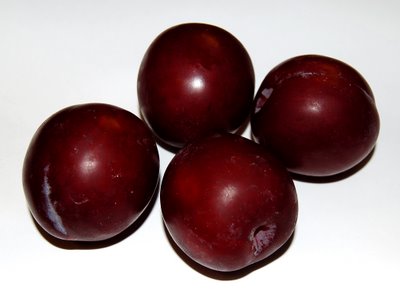
Plums are sweet, juicy and edible. There are many varieties, some sweet, some acidic, and some best suited for drying into prunes. They are often enjoyed fresh for out-of-hand eating, but they work well in cobblers, compotes, tarts, jam and chutneys. They are also available as canned plums, packed in either water or sugar syrup. Plum juice can be fermented into plum wine. When distilled, this produces a brandy known in Eastern Europe as Slivovitz.
Yoghurt Plum Pie
What do we need:
Pie Crust
2 cups flour
1/2 cup cold butter
1/4 cup ice cold water
1/2 tsp salt
Filling
2/3 cup yoghurt
1/3 cup sugar
2 eggs
500 g ripe plums
How do we do it:
In a food processor, place the flour, salt and cold butter. At a low speed, mix the ingredients until it resembles coarse breadcrumbs. Gradually, add the ice cold water 1 tablespoon at a time just until the dough binds together. Make sure not to over work the dough. Wrap with cling film and refrigerate for 2 hours.
On a floured board, roll out the dough into a disk, 2 or 3 inches larger than the pie pan. Transfer the pastry onto the pan. Fit the pastry very well on the bottom and side of the pan. Cut excess pastry. Line with a sheet of aluminium foil and place dried beans or rice as weights. The purpose is to prevent the pastry from bulging out when baking. This method of baking is called blind baking. Bake in a preheated oven at 230°C for 10-15 minutes. Remove from oven. Then, lift the aluminium foil together with the weight. Now return the pastry shell to the oven and bake for another 5 more minutes. Remove from oven and set aside.
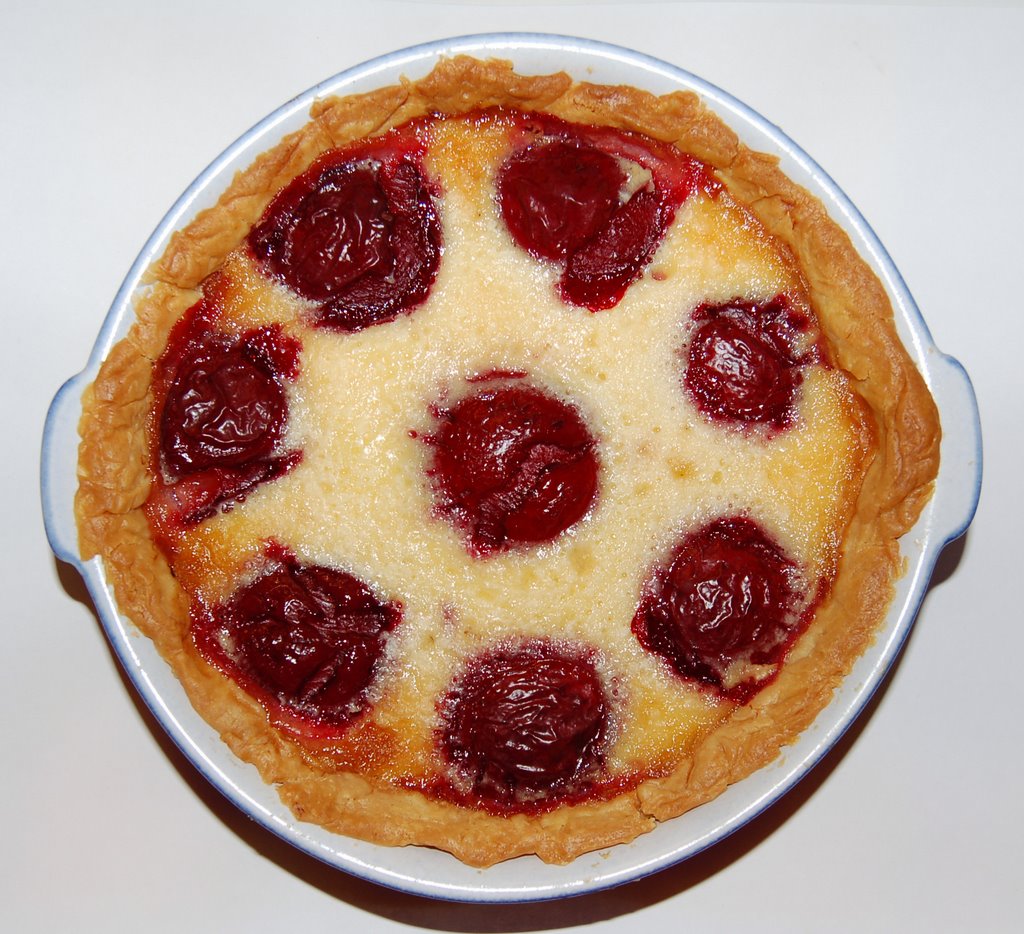
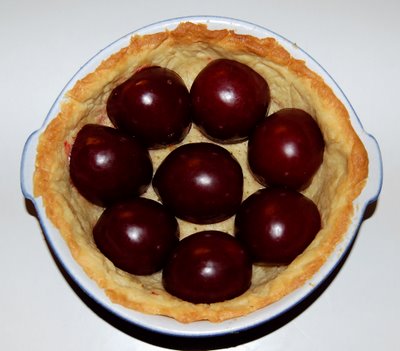
Half the plums and remove the stone. Arrange in a circular form inside the pie shell.
Combine yoghurt, sugar and the eggs. Beat well. Pour the mixture onto the plums.
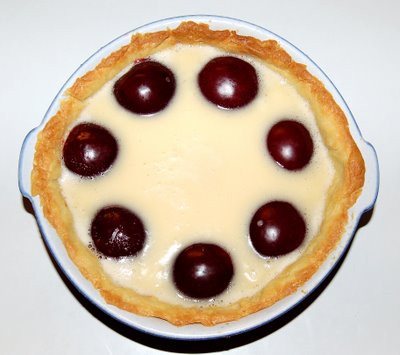
Bake at 150° C for 30 minutes or until a skewer inserted comes out clean.


Plums
Plums are sweet, juicy and edible. There are many varieties, some sweet, some acidic, and some best suited for drying into prunes. They are often enjoyed fresh for out-of-hand eating, but they work well in cobblers, compotes, tarts, jam and chutneys. They are also available as canned plums, packed in either water or sugar syrup. Plum juice can be fermented into plum wine. When distilled, this produces a brandy known in Eastern Europe as Slivovitz.
Yoghurt Plum Pie
What do we need:
Pie Crust
2 cups flour
1/2 cup cold butter
1/4 cup ice cold water
1/2 tsp salt
Filling
2/3 cup yoghurt
1/3 cup sugar
2 eggs
500 g ripe plums
How do we do it:
In a food processor, place the flour, salt and cold butter. At a low speed, mix the ingredients until it resembles coarse breadcrumbs. Gradually, add the ice cold water 1 tablespoon at a time just until the dough binds together. Make sure not to over work the dough. Wrap with cling film and refrigerate for 2 hours.
On a floured board, roll out the dough into a disk, 2 or 3 inches larger than the pie pan. Transfer the pastry onto the pan. Fit the pastry very well on the bottom and side of the pan. Cut excess pastry. Line with a sheet of aluminium foil and place dried beans or rice as weights. The purpose is to prevent the pastry from bulging out when baking. This method of baking is called blind baking. Bake in a preheated oven at 230°C for 10-15 minutes. Remove from oven. Then, lift the aluminium foil together with the weight. Now return the pastry shell to the oven and bake for another 5 more minutes. Remove from oven and set aside.
Half the plums and remove the stone. Arrange in a circular form inside the pie shell.

Combine yoghurt, sugar and the eggs. Beat well. Pour the mixture onto the plums.

Bake at 150° C for 30 minutes or until a skewer inserted comes out clean.